
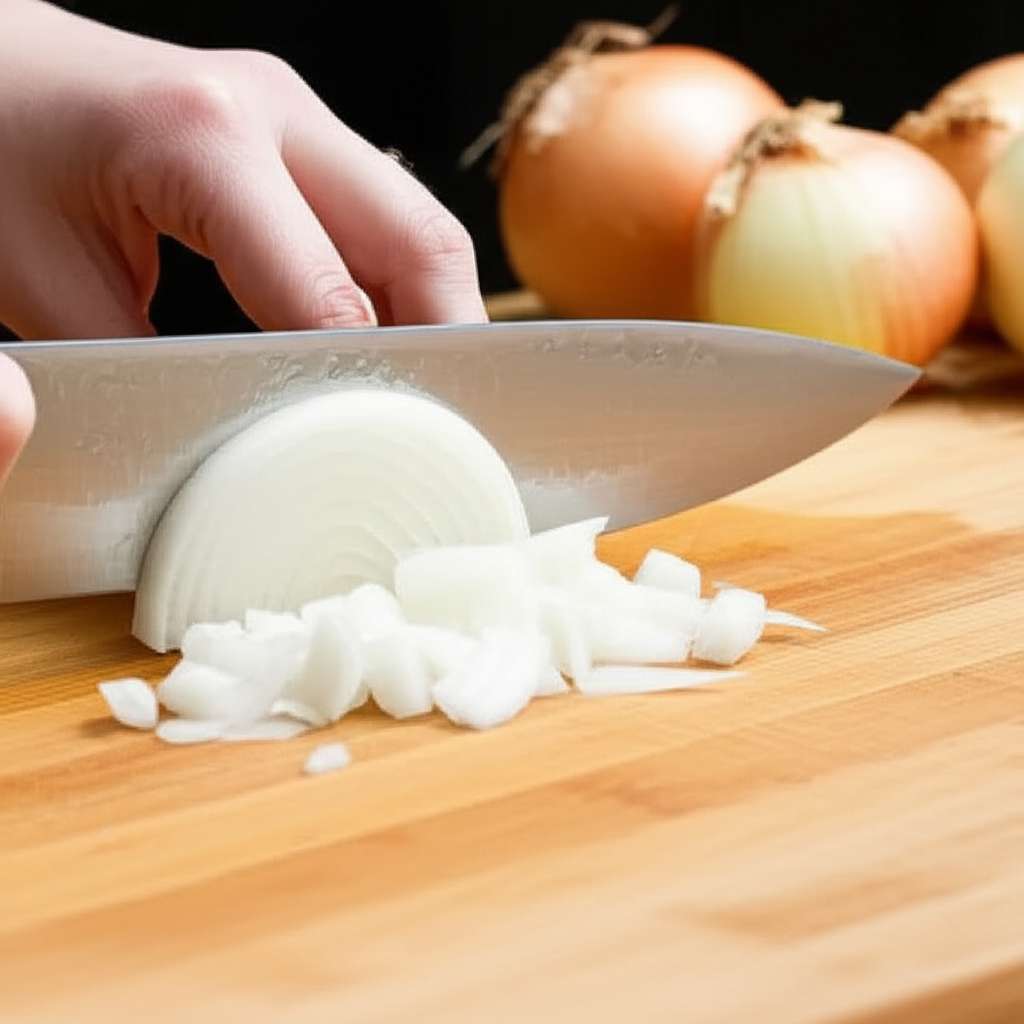
Learn how to chop onions fast and avoid tears with these simple, safe techniques for a tear-free cooking experience.
Chopping onions is a kitchen task that can feel a little intimidating, especially when those stinging vapors fill the air and make your eyes water. Many beginner cooks worry about knife safety and end up feeling frustrated. But don’t worry! This guide is here to help. We’ll walk through everything you need to know, from picking the right tools to mastering a simple chopping technique that keeps your eyes dry and your kitchen happy. Get ready to build some serious kitchen confidence!
Why Do Onions Make Us Cry?
Onions release a gas when their cells are broken. This gas mixes with the moisture in your eyes, creating a mild acid. Your brain sees this as an irritant and tells your eyes to produce tears to wash it away. It’s a natural defense mechanism! But the good news is we can outsmart this little onion trick with a few smart strategies. Understanding this simple science helps us tackle the problem head-on.
Your Tear-Free Onion Chopping Toolkit
Before we start, let’s gather what you’ll need. Having the right tools makes a big difference and ensures you can chop safely and efficiently. Don’t worry if you don’t have fancy gadgets; everyday items work perfectly well.
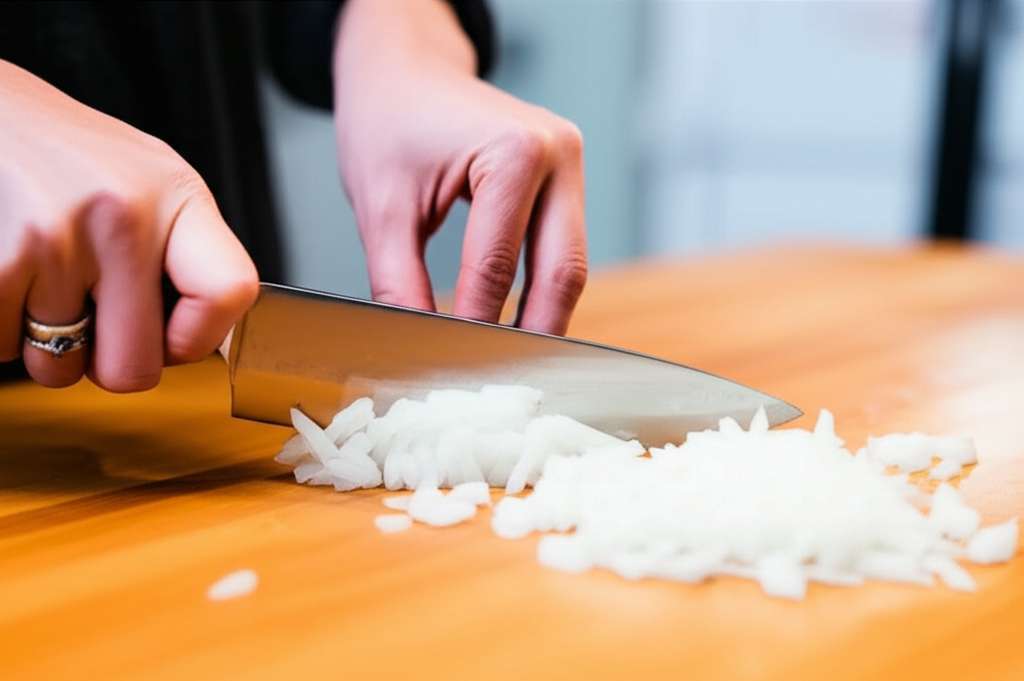
- Sharp Knife: A sharp chef’s knife is ideal. It cuts cleanly through the onion, releasing fewer irritating compounds. A dull knife can crush the onion, making it worse!
- Cutting Board: A stable cutting board is crucial for safety. Make sure it doesn’t slide around on your counter.
- Onion: Choose a firm onion with dry, papery skin.
- Optional: Goggles or Glasses: If you’re really sensitive, kitchen goggles or even swim goggles can create a barrier.
- Optional: Refrigerator or Freezer: A quick chill can help.
The Secret to Fast, Tear-Free Onion Chopping: A Step-by-Step Guide
Ready to become an onion-chopping pro? Follow these simple steps. We’ll focus on a technique that’s safe, efficient, and helps keep those tears at bay. Remember, practice makes perfect, so be patient with yourself!
- Prepare Your Onion: Start by cutting off the top stem end of the onion. Don’t cut off the root end yet – this holds the onion together.
- Halve the Onion: Place the onion flat on your cutting board. Cut it in half from the stem end to the root end. This creates two stable halves.
- Peel the Onion: For each half, peel away the papery outer skin. You can do this with your fingers or by gently sliding your knife under the skin. Make sure the root end is still intact; it acts like a handle.
- Make Horizontal Cuts (Optional but Recommended): Lay an onion half flat on the cutting board, root side down. Carefully make a few horizontal cuts into the onion, stopping before you reach the root. The number of cuts depends on how finely you want to chop. These cuts help break down the onion’s structure and reduce tear-inducing gases.
- Make Vertical Cuts: Now, make vertical cuts from the stem end down towards the root. Again, stop before you reach the root. The spacing of these cuts will determine the size of your dice.
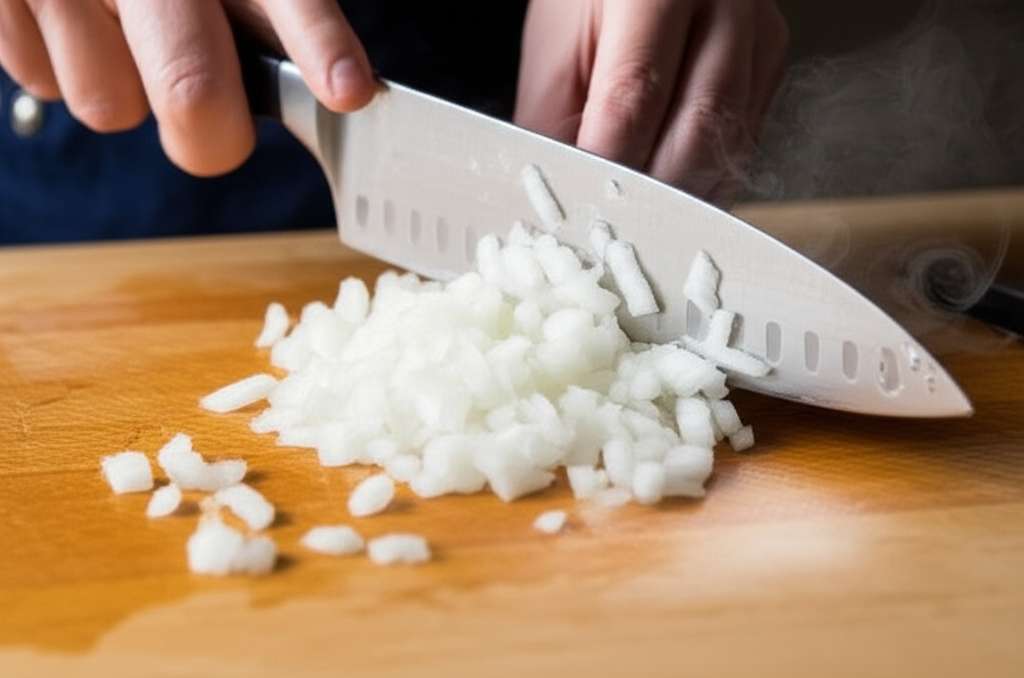
- Dice the Onion: Hold the onion firmly by the root end. Slice across the onion, perpendicular to your vertical cuts. As you slice, the onion will naturally fall apart into small pieces. The root will hold the last bit together. You can then discard the root end.
- Clean Up: Gather your chopped onion and any scraps. Wash your knife and cutting board immediately. Onion oils can transfer flavors, so it’s best to clean up right away.
Common Beginner Mistakes and Quick Fixes
- Mistake: Using a dull knife. This crushes the onion cells, releasing more tear-inducing compounds. Fix: Always use a sharp knife. If your knife isn’t sharp, consider getting it professionally sharpened or learning how to sharpen it yourself. A sharp knife is safer and more effective.
- Mistake: Cutting off the root end too early. The root end acts as a natural handle, keeping the onion halves together for easier cutting. Fix: Always leave the root end intact until the very last step of dicing.
- Mistake: Not stabilizing the cutting board. A sliding board is a recipe for accidents. Fix: Place a damp paper towel or a silicone mat underneath your cutting board to prevent it from moving.
Pro Tips for Ultimate Onion Chopping Success
Here are a few extra tricks to make your onion chopping even smoother:
- Chill Your Onion: Pop your onion in the refrigerator for about 15-30 minutes, or the freezer for 10-15 minutes, before chopping. A colder onion releases less of the irritating gas.
- Run Water: Some people find chopping the onion under running cool water or near a running faucet helps dissipate the gas before it reaches their eyes.
- Use a Very Sharp Knife: This is worth repeating! A sharp knife makes clean cuts, reducing the release of those tear-jerking compounds. For more on knife basics, check out resources from culinary institutions like the Culinary Institute of America.
- Breathe Through Your Mouth: This sounds odd, but some cooks swear by breathing through their mouth with their tongue resting on the roof of their mouth. This can help draw the vapors away from your nasal passages and eyes.
- Work Quickly and Efficiently: The less time the onion is exposed and being cut, the less time the gas has to escape. Once you get the hang of the technique, you’ll be faster.
- Don’t Over-Handle: Try to keep your cuts deliberate and avoid unnecessary touching or squeezing of the onion.
Understanding Your Cutting Tools: A Knife Comparison
Choosing the right knife makes all the difference in the kitchen. For chopping onions, a chef’s knife is usually the best bet. Here’s a quick look at common knives and their uses:
| Knife Type | Blade Length | Primary Use | Why it’s Good for Onions |
|---|---|---|---|
| Chef’s Knife | 8-10 inches | Chopping, dicing, mincing, slicing | Versatile, has a broad blade for stability and a curved edge for rocking motion, allowing for clean, efficient cuts. |
| Paring Knife | 3-4 inches | Peeling, trimming, small, precise tasks | Too small for efficient onion chopping; better for peeling small items. |
| Santoku Knife | 5-7 inches | Slicing, dicing, mincing (especially Asian-style cuts) | Excellent for dicing; the flatter blade is great for straight chopping. |
| Utility Knife | 4-6 inches | Smaller than a chef’s knife, good for general tasks | Can work in a pinch but lacks the size and leverage of a chef’s knife for larger onions. |
Frequently Asked Questions About Chopping Onions
- How can I stop crying when chopping onions?
- The best ways are to use a very sharp knife, chill the onion before cutting, or wear protective eyewear like goggles. Following the cutting method that keeps the root end intact also helps.
- Is it safe to chop onions under running water?
- Yes, it is generally safe. The running water can help wash away some of the sulfur compounds released by the onion, reducing their reach to your eyes. Ensure your cutting board is stable and you have good control of your knife.
- What if my cutting board keeps slipping?
- A slipping cutting board is a safety hazard. Place a damp paper towel, a thin kitchen towel, or a silicone mat underneath your cutting board. This creates friction and keeps it firmly in place.
- How finely should I chop an onion?
- This depends on your recipe! For most recipes, a medium dice is perfect. For sauces or soups, you might want a finer dice. For a chunky salsa, larger pieces are fine. The horizontal cuts in the guide allow you to control the size.
- Can I chop onions ahead of time?
- Yes, you can chop onions ahead of time. Store them in an airtight container in the refrigerator for up to 3-4 days. They might lose a little crispness over time, but they are still perfectly usable for most cooking.
- What’s the best way to store leftover onion pieces?
- Store any uncut or partially cut onion halves in an airtight container or a reusable plastic bag in the refrigerator. They will last for several days and can be used in future cooking. Remember that cut onions absorb odors, so an airtight container is best.
- My knife isn’t very sharp. What should I do?
- A dull knife is less safe and less effective. If you don’t have a sharpener, consider using a honing steel regularly to maintain your knife’s edge. For significant dullness, professional sharpening or learning to use a whetstone is recommended. You can find helpful guides on knife sharpening from reputable sources like the FDA or professional culinary schools.
Your Onion Chopping Journey Begins!
You’ve now learned the secrets to chopping onions quickly and without the tears. We’ve covered why onions make us cry, the tools you need, a simple step-by-step method, helpful tips, and answers to common questions. Remember that every time you practice these steps, you’re building more skill and confidence in the kitchen. Don’t be discouraged by a few tears or a less-than-perfect chop at first; it’s all part of the learning process.
Keep practicing, and soon you’ll be chopping onions like a pro, making your cooking smoother and more enjoyable.