

Store kitchen knives safely and effectively to protect their sharpness and your fingers. Learn simple, beginner-friendly methods like using a knife block, magnetic strip, or blade guards for organized, accessible, and protected knives.
Knives can feel a bit intimidating in the kitchen, especially when you’re just starting out. You might worry about keeping them sharp, preventing accidents, or even just finding a tidy spot for them. It’s completely normal to feel that way! But don’t let it stop you from enjoying the process of cooking.

This guide is here to make storing your kitchen knives super simple and safe. We’ll walk through the best ways to keep them in top shape, protect yourself, and make your kitchen a little more organized. You’ll learn about different storage options, some handy tips, and how to avoid common little slip-ups.
Why Proper Knife Storage Matters
Storing your knives correctly isn’t just about making your kitchen look neat. It’s really important for a few key reasons. First, it keeps your knives from getting damaged. When knives rattle around in a drawer, their sharp edges can bump against other utensils, dulling them quickly. A dull knife is actually more dangerous because it can slip off food more easily, leading to cuts.
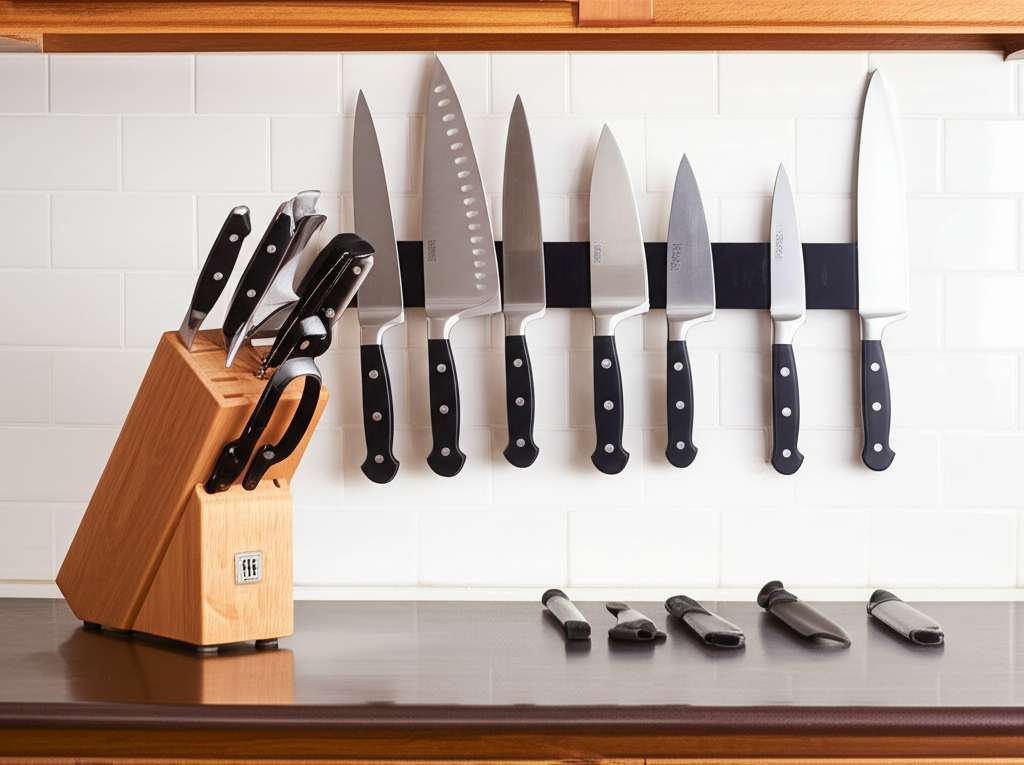
Second, and most importantly, it keeps you and your family safe. A stray knife blade in a drawer is a hazard waiting to happen. Proper storage means your knives are secured and their sharp edges are covered, preventing accidental nicks and cuts when you’re reaching for something else.
Finally, good storage helps your knives last longer. A well-maintained knife is a joy to use and a trusty companion in the kitchen for years to come. Think of it as giving your essential kitchen tools the respect they deserve!
Choosing the Right Storage Solution for You
There are several fantastic ways to store your kitchen knives, and the best one for you depends on your kitchen space, the number of knives you have, and your personal preference. Let’s explore the most popular and effective options.
1. The Classic Knife Block
A knife block is a common sight in many kitchens, and for good reason. It’s a solid block of wood or bamboo with slots designed to hold individual knives securely. Each knife rests in its own dedicated space, protecting the blade and keeping it easily accessible.
Pros:
- Excellent blade protection: Knives don’t touch each other.
- Easy access: You can quickly grab the knife you need.
- Keeps knives organized and visible.
- Looks tidy on the countertop.
Cons:
- Takes up counter space.
- Slots can sometimes be hard to clean.
- Must match your knives to the slots (e.g., a large chef’s knife won’t fit in a small paring knife slot).
- Can sometimes dull knives if slots are too tight or if knives are forced in.
Beginner Tip: When buying a knife block, look for one with universal slots if possible, or one that comes with a starter set of knives to ensure a good fit. Always slide your knives in gently, never force them.
2. The Magnetic Knife Strip
A magnetic strip is a sleek and modern way to store your knives. It’s usually a long bar mounted on your wall, embedded with strong magnets. You simply place your knife’s blade against the strip, and it holds it firmly in place.
Pros:
- Saves counter and drawer space.
- Keeps knives visible and readily accessible.
- Easy to clean.
- Can hold knives of various sizes and shapes.
- Looks very professional and modern.
Cons:
- Requires wall space for mounting.
- Magnets need to be strong enough to hold knives securely.
- Requires careful placement and removal of knives to avoid scratching the blades or the strip.
- Potential safety concern if not mounted securely or if small children can reach it.
Beginner Tip: Mount the magnetic strip at a height that is comfortable for you to reach but out of reach of young children. When placing a knife on the strip, align it carefully and let the magnet do the work. To remove, grip the handle firmly and pull the knife straight off the strip.
3. In-Drawer Knife Organizers
If you prefer to keep your knives tucked away, an in-drawer organizer is a great solution. These are typically plastic or wooden inserts with slots or compartments specifically designed to hold knives safely within a drawer. Some are universal, while others are designed for specific drawer depths or knife types.
Pros:
- Keeps knives safely stored and out of sight.
- Protects blades from damage and keeps them sharp.
- Maximizes drawer space and keeps things tidy.
- Safer than loose knives in a drawer.
Cons:
- Requires dedicated drawer space.
- Can be less convenient than countertop storage if you use knives frequently.
- May not accommodate very long or unusually shaped knives.
Beginner Tip: Measure your drawer before purchasing to ensure a good fit. Look for organizers with deep enough slots to fully support the blade.
4. Blade Guards (Sheaths)
Blade guards, also known as sheaths or edge protectors, are individual covers that slide over the blade of a knife. They are usually made of plastic or leather and come in various sizes to fit different blade lengths and widths. This is a fantastic option for knives that don’t have a dedicated spot or if you need to store them loosely in a drawer.
Pros:
- Inexpensive and versatile.
- Protects individual blades effectively.
- Allows for safe storage of knives in a drawer without an organizer.
- Great for transporting knives.
Cons:
- Adds an extra step to grabbing a knife.
- Can be misplaced if not stored with the knife.
- Not as aesthetically pleasing as other methods if knives are stored out.
Beginner Tip: Always ensure the guard is the correct size for your knife. Slide it on carefully, ensuring the blade’s edge doesn’t catch on the inside of the guard. For extra safety, choose guards with a slightly textured interior or a locking mechanism if available.
5. Knife Rolls or Bags
Knife rolls are typically made of fabric (like canvas or leather) with individual pockets or sleeves for each knife. They are often used by professional chefs for transporting their knives, but they can also be a neat storage solution at home, especially for those with a larger collection or limited counter space.
Pros:
- Excellent for protecting knives, especially during transport.
- Can hold a large number of knives.
- Stores knives compactly.
Cons:
- Less convenient for everyday use at home.
- Requires rolling and unrolling to access knives.
- May not offer as much rigidity for blade protection as a block or strip.
Beginner Tip: If you opt for a knife roll, ensure each knife is dry before placing it inside to prevent rust. Roll it up snugly to keep knives from shifting too much.
How to Safely Store Knives: A Step-by-Step Guide
No matter which storage method you choose, the key is always safety and care for your blades. Here’s how to do it right:
- Clean and Dry Your Knives: Before storing any knife, wash it by hand with warm, soapy water. Never put good knives in the dishwasher, as the high heat and harsh detergents can damage the blade and handle. Once washed, dry it thoroughly with a clean, soft towel. Moisture is the enemy of steel and can lead to rust spots.
- Choose Your Storage Location: Decide where your knives will live. If using a knife block or magnetic strip, ensure they are placed on a stable countertop away from high-traffic areas or the edge where they could be knocked off. If using an in-drawer organizer or blade guards, select a drawer that is easy to access but not one you’ll be rummaging through for other items.
- Place Knives Securely:
- Knife Block: Gently slide the knife into its designated slot. Don’t force it. Ensure the blade is fully seated.
- Magnetic Strip: Hold the knife handle firmly. Align the blade flat against the strip, starting from the spine (the dullest part of the blade). Let the magnet gently pull the blade into place. To remove, grip the handle, and pull the knife straight away from the strip.
- In-Drawer Organizer: Place each knife into its slot or compartment, ensuring the blade is protected and the knife is stable.
- Blade Guards: Carefully slide the guard over the blade until it is fully covered. Ensure the guard is the correct size and fits snugly.
- Regularly Check Storage: Periodically inspect your knives and storage system. Make sure knives are still secure, that no rust has appeared, and that the storage unit itself is clean and stable. For knife blocks, you can use a small brush to clean out slots if needed.
Common Beginner Mistakes & Quick Fixes
- Mistake: Throwing knives into a drawer.
Fix: Always use blade guards or an in-drawer organizer. A few seconds to protect your knives and fingers is worth it! - Mistake: Washing knives in the dishwasher.
Fix: Hand wash with soap and water, and dry immediately. It’s a small habit that saves your knives from damage and dulling. - Mistake: Forcing a knife into a tight slot in a block.
Fix: Try a different slot or use blade guards for that knife. Forcing can damage both the knife and the block. - Mistake: Storing knives wet.
Fix: Always dry knives completely after washing. Even a little moisture can cause rust on high-carbon steel blades.
Pro Tips for Happy Knives
Here are a few extra tips to keep your knives in tip-top shape and your cooking experience smooth and safe:
- Always Dry Them Immediately: After washing, don’t let knives air dry. A quick wipe with a soft towel is essential to prevent rust and water spots, especially on good quality steel.
- Use the Right Knife for the Job: Using a small paring knife to chop through tough vegetables or a bread knife for delicate herbs can dull or damage your blades. Match the knife to the task!
- Consider Blade Material: Stainless steel is common and resistant to rust, while high-carbon stainless steel offers a harder edge but may require a bit more care to prevent rust. Knowing your blade’s material helps you care for it best.
- Invest in a Good Chef’s Knife: If you’re just starting, a quality chef’s knife is your most versatile tool. Focus on storing this one well first.
- Keep Them Sharp: Counter-intuitively, sharp knives are safer. A sharp edge cuts through food with less effort and is less likely to slip. Hone your knives regularly and get them professionally sharpened when needed. For more on knife sharpening, check out resources from culinary experts.
- Be Mindful of Your Surroundings: When using a magnetic strip, ensure it’s mounted on a sturdy wall and that nothing is blocking access to the knives. Keep them away from areas where they might be bumped or where children can reach them.
Knife Storage Options at a Glance
Choosing the best storage can feel overwhelming with so many choices. Here’s a quick comparison to help you decide:
| Storage Method | Best For | Blade Protection | Space Efficiency | Accessibility | Safety Level |
|---|---|---|---|---|---|
| Knife Block | Countertop display, dedicated knife sets | Excellent (knives separated) | Moderate (takes counter space) | High (easy grab) | High (blades enclosed) |
| Magnetic Strip | Modern kitchens, showcasing knives, saving space | Good (if handled carefully) | High (wall-mounted) | Very High (visible and easy grab) | Moderate-High (requires careful placement/removal) |
| In-Drawer Organizer | Tidy drawers, keeping knives hidden | Excellent (knives secured in slots) | High (utilizes drawer space) | Moderate (requires opening drawer) | Very High (blades protected in drawer) |
| Blade Guards | Loose knives in drawers, transport, budget-friendly | Excellent (individual protection) | High (allows drawer storage) | Low (extra step to remove guard) | High (blade is covered) |
| Knife Roll/Bag | Transporting knives, large collections, compact storage | Excellent (knives individually pocketed) | Very High (rolls up compactly) | Low (requires unrolling) | High (knives secured within roll) |
Frequently Asked Questions About Storing Kitchen Knives
Are magnetic knife strips safe?
Yes, magnetic knife strips are generally very safe when installed correctly and used properly. Mount it securely on a wall at a suitable height. Always place and remove knives carefully by gripping the handle and pulling straight off the magnet to avoid slipping. Keep them out of reach of children.
Can I store different types of knives together?
It’s best not to store different knives loosely together in a drawer. Their blades can clash and become dull or chipped. If you must store them in a drawer without an organizer, use individual blade guards on each knife.
How do I clean a knife block?
You can clean a knife block by carefully using a soft brush (like a toothbrush or a small pastry brush) to sweep out any crumbs or debris from the slots. For a deeper clean, you can sometimes remove the wooden base (if it’s designed to detach) or carefully wipe the exterior with a damp cloth. Ensure it’s completely dry before putting knives back.
What’s the best way to store my most-used knives?
For your most-used knives, like your chef’s knife or paring knife, countertop storage like a knife block or a magnetic strip is often best. This keeps them easily accessible for quick meal prep, saving you the steps of opening a drawer or removing blade guards.
Should I use blade guards if I have a knife block?
Typically, you don’t need blade guards if your knives are stored in a good quality knife block, as the block itself protects the blades. However, if a slot is a bit loose, or if you’re temporarily storing a knife elsewhere, a guard can add extra protection.
How often should I check my knives for rust?
You should check your knives for rust every time you use and clean them. High-carbon steel knives are more prone to rust than stainless steel. Drying them immediately after washing is the best prevention. A quick wipe down and visual check will catch any early signs of rust.
Embrace Your Organized Kitchen
Learning how to store your kitchen knives is a fantastic step towards a more confident and enjoyable cooking experience. You’ve learned why proper storage is key for safety and blade longevity, explored various practical storage solutions from classic blocks to sleek magnetic strips, and discovered simple steps to keep your knives in perfect condition. Remember, the goal isn’t perfection, but progress and a little more ease in your kitchen.
By choosing a storage method that fits your space and needs, and by taking just a few moments to care for your knives after each use, you’ll be rewarded with tools that perform beautifully and last a long time. Keep practicing these simple habits, and you’ll be amazed at how much more confident and creative you feel in your kitchen.