

Poached egg on toast is a wonderfully simple yet delicious dish. This guide breaks down how to make a perfect poached egg for your toast, ensuring a runny yolk and tender white every single time. It’s a quick, healthy, and satisfying meal that’s surprisingly easy to master!
Ever stared at a recipe for poached eggs and felt a little intimidated? We’ve all been there! The thought of creating those perfectly shaped, wobbly eggs with creamy centers can seem like a culinary magic trick.
But what if I told you it’s much simpler than you think? It’s all about a few key techniques and a little bit of calm.
Get ready to transform your breakfast or brunch game with this easy-to-follow guide. We’ll walk through each step so you can enjoy a truly amazing poached egg on toast!
Why You’ll Love This Poached Egg on Toast Recipe
This classic dish is a winner for so many reasons. It’s incredibly versatile, incredibly quick, and incredibly satisfying.
Think about it: a perfectly toasted piece of bread, a tender, delicately cooked egg with a rich, runny yolk that cascades down when you slice into it, mingling with the toast. Pure comfort and deliciousness!

It’s also a fantastic canvas for flavor. You can keep it simple with just salt and pepper, or you can dress it up with herbs, a dash of hot sauce, or even a sprinkle of paprika.
Nutritious and Delicious
Eggs are a nutritional powerhouse, packed with high-quality protein, vitamins, and minerals. Poaching them is a healthy cooking method because it doesn’t require any added fats like oil or butter, unlike frying.
When you pair this nutritious egg with a slice of whole-grain toast, you’ve got a balanced meal that will keep you feeling full and energized. It’s a smart choice that tastes amazing!
Quick and Easy
One of the best things about poached eggs is how fast they cook. You can have a perfectly poached egg ready in just a few minutes. This makes it ideal for busy mornings when you still want something delicious and wholesome.
Once you get the hang of it, poaching an egg becomes second nature. It’s one of those kitchen skills that feels impressive but is surprisingly straightforward.
Flavorful Versatility
The beauty of a poached egg on toast lies in its simplicity, allowing its natural flavors to shine. The creamy yolk coats the toast, creating a rich, satisfying base.
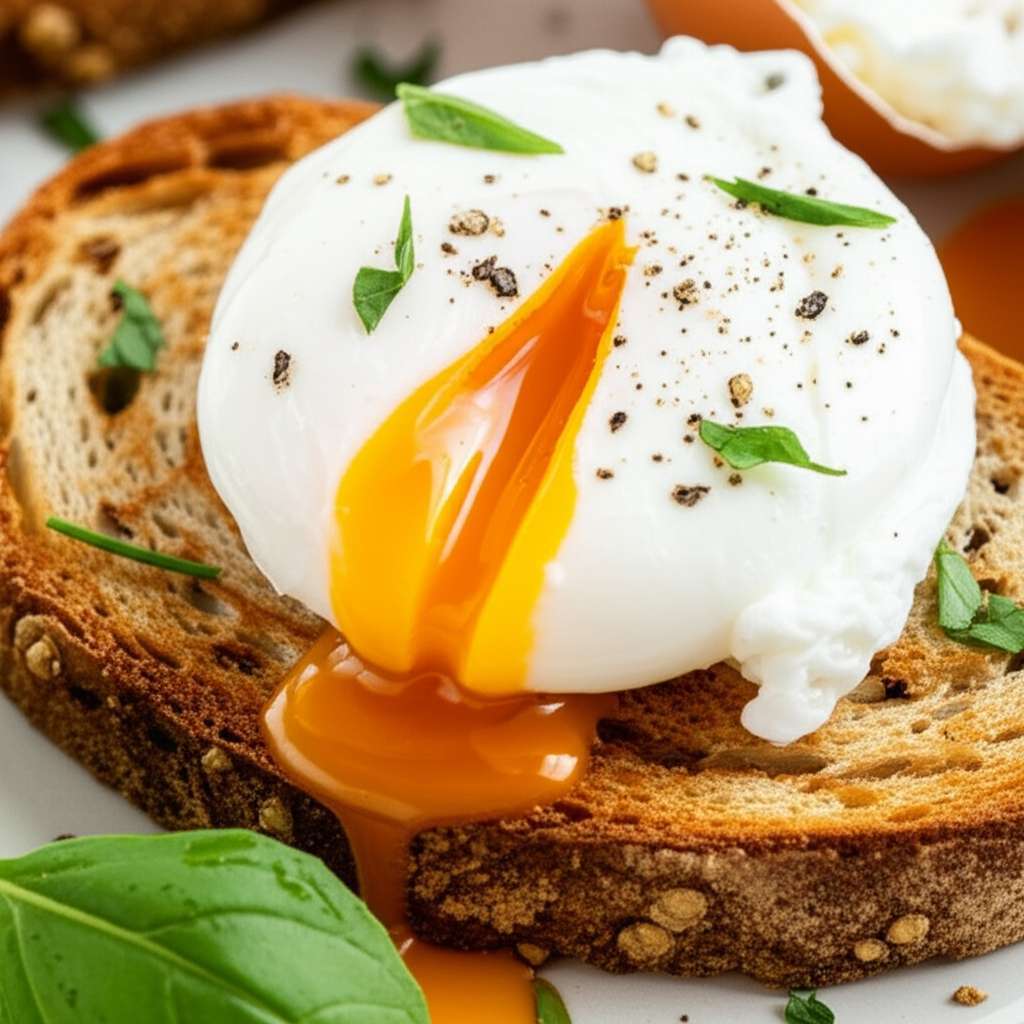
But don’t stop there! You can elevate this basic dish with simple additions. A sprinkle of fresh chives, a pinch of chili flakes, or a drizzle of your favorite hot sauce can transport your poached egg from good to absolutely sensational.
Essential Ingredients and Tools
The beauty of this recipe is its simplicity. You probably have most of these ingredients and tools already in your kitchen!
Let’s gather what you’ll need to create that perfect poached egg on toast.
Ingredients:
- 1-2 large fresh eggs (freshness is key for good poaching!)
- 1-2 slices of your favorite bread (sourdough, whole wheat, or a hearty country loaf work wonderfully)
- Salt and freshly ground black pepper, to taste
- Optional toppings: fresh herbs (like chives or parsley), a dash of hot sauce, a sprinkle of paprika, or a drizzle of olive oil.
Tools:
- A medium saucepan or pot (deep enough to hold about 3-4 inches of water)
- A slotted spoon or a spider strainer
- A small bowl or ramekin for cracking the egg into
- A toaster or broiler (for toasting the bread)
- A timer (your phone works great!)
Step-by-Step: How to Poach an Egg Perfectly
Let’s get cooking! Follow these simple steps to achieve a beautifully poached egg every time. Remember, practice makes perfect, but these instructions will set you up for success right away.
1. Prepare Your Water Bath
Fill your medium saucepan about 3 to 4 inches deep with water. You want enough water so the eggs can be fully submerged without touching the bottom of the pot. Place the saucepan on the stove over medium-high heat.
We’re looking for a gentle simmer, not a rolling boil. A rolling boil can break up the egg white and make it messy. You’ll see small bubbles rising to the surface. This is the sweet spot!
2. Add a Hint of Acidity (Optional but Recommended!)
This is a little trick that helps the egg whites coagulate (set) faster and hold their shape better. Add about 1-2 tablespoons of white vinegar or lemon juice to the water. It sounds strange, but you won’t taste it in the finished egg!
Just a splash is all you need. The acid in the vinegar or lemon juice helps the proteins in the egg white bind together more efficiently, resulting in a neater, more compact poached egg.
Table: The Science of Poaching Water
| Water State | Appearance | Effect on Poaching |
|---|---|---|
| Cold/No Heat | Still water | Egg will not cook. |
| Simmering | Small, gentle bubbles rising from the bottom, water is just below boiling (around 180-190°F or 82-88°C). | Ideal for poaching; keeps the egg together without breaking it apart. |
| Boiling | Large, vigorous bubbles, water is rapidly churning (212°F or 100°C). | Too harsh; can break apart the egg white and make it stringy. |
3. Toast Your Bread
While the water heats up, toast your bread to your liking. You can use a toaster or pop it under the broiler. Aim for a golden-brown crispness that will hold up to the egg and any juices.
A nicely toasted piece of bread provides a sturdy and delicious base. It also adds a lovely crunch that contrasts beautifully with the soft egg. Once toasted, you can lightly butter it or leave it plain, depending on your preference.
4. Crack Your Egg(s)
This is a crucial step for a neat poached egg. Crack each egg into a separate small bowl or ramekin. This allows you to carefully slide the egg into the water and also check for shell fragments before it goes into the pot.
Gently swirling the water with your slotted spoon right before adding the egg can create a gentle vortex. This helps the egg white wrap around the yolk as it cooks. Slide the egg into the center of this swirl.
5. Poach the Egg
Carefully slide the egg from the ramekin into the simmering water. If poaching multiple eggs, do them one at a time, or add them gently to different spots in the pot, ensuring they don’t touch each other initially.
Let the eggs poach undisturbed for about 3 to 4 minutes. The whites should be set and opaque, but the yolk should still be softly wobbly. You can gently nudge them with your slotted spoon to see if they wiggle too much. For a firmer yolk, you can cook them a minute longer.
6. Retrieve and Drain
Using your slotted spoon or spider strainer, carefully lift the poached egg out of the water. Gently dab the bottom of the spoon on a paper towel to remove any excess water. This prevents a soggy toast!
You want to be gentle here. The goal is to lift the egg without breaking its delicate structure. The slotted spoon is your best friend for this part, allowing the water to drain away.
7. Serve Immediately
Place the perfectly poached egg directly onto your toasted bread. Season generously with salt and freshly ground black pepper. Add any of your favorite optional toppings now!
The heat from the egg will slightly warm the toast. Slice into it immediately to enjoy that glorious runny yolk. Don’t let it sit too long – the magic is in the moment!
Tips for Poaching Success
Even the simplest recipes can have little secrets that make them even better. Here are a few extra tips to help you on your journey to perfect poached eggs.
- Fresh Eggs are Best: Older eggs have thinner whites that spread out more in the water, making them harder to poach neatly. Look for eggs that are firm and hold their shape. You can test freshness by placing an egg in a bowl of water; a fresh egg will lie flat on its side.
- Don’t Overcrowd the Pot: Cooking too many eggs at once can lower the water temperature and cause the eggs to stick together. Poach them in batches if necessary.
- Gentle Simmer is Key: Avoid a rolling boil! The water should be barely bubbling. If it’s too vigorous, the egg will disperse. Turn the heat down if needed.
- Strain for Neatness: Some chefs like to strain their eggs through a fine-mesh sieve before poaching to remove the very watery outer part of the egg white. This creates a more compact and perfectly shaped poached egg.
- Vinegar or No Vinegar?: While optional, a teaspoon of white vinegar or lemon juice in the water truly helps whites set. Don’t worry, you won’t taste it! For more insight into the science behind cooking, resources like the USDA’s Food Safety and Inspection Service offer great background information on food science principles, though they don’t cover specific recipe techniques.
Variations to Elevate Your Poached Egg on Toast
Once you’ve mastered the basic poached egg on toast, you can start experimenting with different flavors and additions. Here are a few ideas to inspire you!
Avocado Toast with a Poached Egg
Mash a ripe avocado with a pinch of salt, pepper, and a squeeze of lime juice. Spread it generously on your toasted bread, then top with your perfectly poached egg. A sprinkle of red pepper flakes adds a nice kick!
Smoked Salmon and Dill
Layer a slice of toasted whole-grain bread with a thin layer of cream cheese, a few slices of smoked salmon, and a sprinkle of fresh dill. Top with your poached egg and a grind of black pepper. It’s a classy and delicious brunch option.
Spinach and Feta
Sauté some fresh spinach with a clove of garlic until wilted. Crumble some feta cheese over the spinach, then place your poached egg on top. A drizzle of olive oil and a sprinkle of dried oregano completes this Mediterranean-inspired dish.
Mushroom and Chives
Sauté sliced mushrooms until golden brown. Chop some fresh chives. Pile the sautéed mushrooms onto your toast, top with the poached egg, and sprinkle liberally with fresh chives. This offers an earthy, savory delight.
Troubleshooting Common Poaching Problems
Don’t worry if your first few attempts aren’t perfect. Even seasoned cooks have occasional mishaps! Here are some common issues and how to fix them.
Problem: My poached eggs are wispy and falling apart.
Solution: This usually means your eggs aren’t fresh enough, or your water is boiling too vigorously. Use the freshest eggs you can find and ensure your water is at a gentle simmer, not a rolling boil. Adding vinegar to the water can also help the whites set more firmly.
Problem: My poached eggs are rubbery.
Solution: This typically happens if the eggs are overcooked. They only need about 3-4 minutes in simmering water. Keep a close eye on them and aim for set whites with a still-wobbly yolk.
Problem: The yolk is cooked, but I wanted it runny.
Solution: You might have cooked them for too long. Try reducing your poaching time by 30 seconds to 1 minute. Remember, the residual heat will continue to cook the egg slightly after you remove it from the water.
Problem: My eggs are sticking to the bottom of the pot.
Solution: This is less common with just water but can happen. Ensure you are gently sliding the egg in and not letting it drop from a height. A bit of vinegar can also subtly change the water’s surface tension, making sticking less likely.
Frequently Asked Questions About Poached Eggs on Toast
What makes a poached egg white spread out so much?
The main reason is the age of the egg. Older eggs have whites that are thinner and more watery, so they spread out more in the water. Fresher eggs have firmer whites that hold their shape better around the yolk.
Can I make poached eggs ahead of time?
While you can cook poached eggs a few hours in advance, they are best served immediately. If you must make them ahead, gently poach them until the whites are mostly set but the yolk is still very soft. Then, cool them rapidly in an ice bath. To reheat, briefly return them to warm, not boiling, water for about 30 seconds to a minute.
How much vinegar should I add to the poaching water?
A good rule of thumb is 1 to 2 tablespoons of white vinegar or lemon juice per quart (about 1 liter) of water. You won’t taste it, and it significantly helps the egg whites cook evenly and stay together.
What is the best type of bread for poached eggs?
Any sturdy bread will work well! Sourdough, whole wheat, rye, or a good quality artisan loaf are excellent choices because they can hold up to the moisture from the egg without becoming soggy.
What is the difference between poaching and boiling an egg?
Boiling involves cooking an egg in its shell in water. Poaching means cooking a shell-less egg directly in simmering liquid, usually water, until the whites are set and the yolk remains runny. It’s a gentler cooking method.
Can I poach eggs in something other than water?
Yes! You can poach eggs in broth (chicken, vegetable) for added flavor, or even in sauces like tomato sauce for shakshuka. The principle of simmering holds true, but the liquid will impart its own taste.
Conclusion: Your Delicious Poached Egg on Toast Awaits!
See? Making a perfectly poached egg on toast is not as daunting as it might seem. With just a few simple ingredients, a dash of vinegar (optional, but helpful!), and a gentle simmer, you can create a dish that’s both elegant and incredibly satisfying.
This recipe is a fantastic building block for your culinary adventures. It’s proof that delicious, homemade meals don’t have to be complicated or time-consuming. You’ve learned how to master the gentle art of poaching, and that’s a skill worth celebrating!
So go ahead, give it a try! Toast your favorite bread, poach that egg with confidence, and enjoy the simple, amazing flavor. What toppings will you add to make it your own? Happy cooking!